
Fb-Button
U2 Archives - Page 2 of 2 - Classic Rock Guitar

Tag: U2

  • U2 – VERTIGO

    U2 – VERTIGO

    U2 – Vertigo: A Triumph of Musical Creativity and Innovation

    U2 is one of the most iconic bands of all time, known for their innovative sound and powerful lyrics. Their hit song “Vertigo” is a prime example of their talent for creating music that pushes the boundaries of the genre and speaks to the heart of the human experience.

    The song begins with a blistering guitar riff that sets the tone for the rest of the song. The vocals enter, full of energy and passion, as the lyrics describe the dizzying sensation of falling in love. The lyrics are full of rich metaphors and analogies, creating a vivid sense of atmosphere and emotion.

    As the song progresses, the instrumentation becomes more complex, with layers of guitar and keyboard building up to a crescendo of sound. The chorus is a moment of pure catharsis, with the vocals reaching for the heavens and the instruments coming together in a powerful symphony of sound.

    But the real heart of the song is the lyrics, which speak to the power of love to lift us up and carry us forward. The dizzying sensation of falling in love is compared to the sensation of standing at the edge of a cliff, looking out at the world below. It’s a feeling that is both exhilarating and terrifying, reminding us of the power that love can have over us.

    In the final moments of the song, the guitar riff fades away, leaving the listener with a sense of euphoria and a hunger for more. U2’s “Vertigo” is a true triumph of musical creativity and innovation, a song that captures the essence of what it means to be alive and to feel the full spectrum of human emotions.

    U2’s “Vertigo” is a masterpiece of musical storytelling, a tribute to the power of love to lift us up and carry us forward. With its blistering guitar riffs, soaring vocals, and evocative lyrics, the song is a testament to the enduring power of great music to inspire and engage listeners in a profound and meaningful way.

    We appreciate your time and dedication in reading our article to its conclusion. For more of the finest classic rock music, make sure to follow our Facebook page, “Classic Rock Guitar”. We share exceptional selections every day. Thank you once again for your continued support and readership.

  • U2 – PRIDE

    U2 – PRIDE

    U2 “Pride”: A Song of Hope and Inspiration

    Released in 1984, “Pride (In the Name of Love)” is one of U2 most beloved and enduring songs. Written in tribute to civil rights leader Martin Luther King Jr., the song is a powerful anthem of hope and inspiration that has resonated with audiences for decades.

    From its opening guitar riff, “Pride” is an instantly recognizable song that captures the passion and energy of U2’s early years. The song’s lyrics are a tribute to King’s legacy and his tireless efforts to promote equality and justice for all people.

    Bono’s soaring vocals are at the heart of the song, delivering the message of hope and inspiration with power and conviction. The lyrics are simple yet effective, with lines like “One man come in the name of love / One man come and go” encapsulating King’s message of unity and equality.

    “Pride” is also notable for its powerful instrumentation, with The Edge’s driving guitar riffs and Larry Mullen Jr.’s propulsive drumming adding to the song’s sense of urgency and energy. The song’s memorable chorus, with its repetition of the phrase “In the name of love,” has become an iconic part of U2’s legacy.

    Over the years, “Pride” has been used as a rallying cry for social justice and equality movements around the world. It has been covered by countless artists and featured in numerous films, TV shows, and commercials. The song’s enduring popularity is a testament to its message of hope and the power of music to inspire change.

    “Pride (In the Name of Love)” is a timeless song that captures the spirit of U2’s early years and the legacy of Martin Luther King Jr. Its message of hope and inspiration continues to resonate with audiences around the world, making it one of U2’s most beloved and enduring songs. As the band continues to inspire and captivate fans with their music, “Pride” remains a shining example of the power of music to bring people together and inspire change.

    We appreciate your time and dedication in reading our article to its conclusion. For more of the finest classic rock music, make sure to follow our Facebook page, “Classic Rock Guitar”. We share exceptional selections every day. Thank you once again for your continued support and readership.

  • U2 – ONE

    U2 – ONE

    The Musical Journey of U2: A Story of Passion, Purpose and Persistence

    U2, one of the most iconic bands of all time, has been entertaining audiences and making music for over four decades. But what is it that sets U2 apart from other bands and has made them one of the most successful and enduring groups in music history? The answer is a combination of passion, purpose, and persistence.

    A band with a purpose

    U2 is a band that has always had a purpose. From their early days as a punk band in Dublin to their current status as one of the biggest bands in the world, U2 has always had a message to share with the world. Their music is often political and socially conscious, tackling issues such as poverty, war, and human rights. But more than that, their music is about hope and the belief that things can change for the better.

    A band with passion

    Passion is the driving force behind U2’s music. From Bono’s powerful vocals to The Edge’s masterful guitar playing, every member of the band pours their heart and soul into their performances. Their live shows are legendary, with Bono often known to jump into the crowd or climb the stage’s scaffolding. It’s this passion that has kept U2’s music relevant and exciting for decades.

    A band with persistence

    U2’s success has not come easy. The band has faced its fair share of challenges over the years, including lineup changes and creative differences. But they have always persevered. They have never given up on their dreams and have always found a way to come out on top.

    Like a phoenix rising from the ashes, U2 has reinvented itself time and time again, constantly pushing the boundaries of what is possible in music. Their ability to adapt and evolve has kept them relevant in an ever-changing music industry.

    U2’s career is a testament to the power of passion, purpose, and persistence. Their music has touched the lives of millions of people around the world, and their legacy will continue to inspire future generations of musicians. They are a band that has truly stood the test of time, and their music will be remembered for centuries to come.

    In conclusion, U2’s music career is a story of a band that found its purpose, followed its passion and remained persistent through the years. They have been able to touch the hearts of millions of people around the world and will continue to do so for many more years to come.

    We appreciate your time and dedication in reading our article to its conclusion. For more of the finest classic rock music, make sure to follow our Facebook page, “Classic Rock Guitar”. We share exceptional selections every day. Thank you once again for your continued support and readership.

  • U2 – With Or Without You

    U2 – With Or Without You

    U2

    No one will deny that U2 has established itself as one of the supreme bands in rock history. What’s more, for two decades of the group’s existence, no musician left U2, and no new one joined.

    According to the tradition of the 80s, young Irishmen became a band before they could play. U2, strongly influenced by punk ideology, opposed the empty visions of dark new wave groups by going out to the audience with youthful energy. Their first release – “U23” – from 1979, which was released only in Ireland, was supported by a self-organized route. Despite the lack of a proposal for a large record contract, after several concerts in London, the tour ended with an event for two thousand fans in Dublin.

    The first three albums – “Boy” (1980), “October” (1981) and “War” (1983) – defined the style of the group. They were soon recognized as the most politically engaged band since The Clash. At a concert in Belfast, before the first performance of “Sunday Bloody Sunday”, Bono announced: “If you don’t like it, let us know …”

    In an exclusive performance at the iconic Abbey Road Studios in London, Adam, Bono, Edge and Larry play one the classic With Or Without You accompanied by an orchestra for U2 At The BBC – a special programme for BBC One.

    U2 is primarily the vocal talent and personality of the frontman Bono (at school he was called Bono Vox, from the Latin “bona vox” – “good voice”) and the characteristic sound of The Edge’s guitar. The musician plays sparingly. He is rarely tempted by long solos. He mainly uses higher notes, building minichords on them and using various techniques of extending reverberations, such as echo and reverb.

    The history of U2 has been going on for almost 40 years. The composition has remained the same since 1978. Which does not mean that the members of the quartet do not participate in solo projects. Bono sang on the famous Band Aid charity record, “Do They Know it’s Christmas?/Feed the World”, and co-wrote the theme song for the film “Golden Eye”, sung by Tina Turner, with Edge. He even has duets with Luciano Pavarotti and… Frank Sinatra.

    U2 - With Or Without You
  • U2 – ORDINARY LOVE

    U2 – ORDINARY LOVE

    The Lyrical Odyssey: U2 – “Ordinary Love”

    If music were an artist’s canvas, U2 paints with a palette rich in vibrant hues of human emotion. Their song “Ordinary Love” is no mere sonic spectacle; it is a tender tapestry woven from threads of resilience, warmth, and gentle defiance.

    This musical marvel unfurls softly, gently whispering its entrance like a dawn’s first light. In true U2 fashion, The Edge’s guitar strums are akin to raindrops dancing on a tin roof, a serenade that teases your soul. They’re discreet yet bold, demonstrating a restraint that echoes the audacity of the ordinary in love.

    Love’s Melodious Metamorphosis

    As Bono croons the narrative, his voice is a soft breeze that carries the gravitas of the song’s message. It billows through the melody like a ship on an ocean of passion, undeterred by adversity. His voice is not merely a conduit of words, but a living embodiment of the love he sings. The lyrics, they rise and fall like waves, transporting the listener on a journey through the tumultuous seas and serene shores of ordinary love.

    “Ordinary Love” isn’t simply a serenade to romance, it’s a tribute to the love that remains when the grandeur fades. The love that’s as constant as a northern star, as reliable as the dawn after a moonless night. It personifies the invisible ties that bind us, the subtle magic that is too often overlooked.

    The rhythm, the melody, the lyrics – they converge into a symphony of pure emotion. It is a shared experience, a knowing nod to the understanding that sometimes love isn’t a lightning bolt, but a gentle fire that warms the soul, nurtures the heart, and endures time.

    In its bare essence, “Ordinary Love” is a resounding proclamation that love, in all its ordinary and extraordinary forms, matters. The song stands as a timeless testament to U2’s ability to turn the ordinary into something undeniably beautiful, something eternally extraordinary. It whispers, in its poignant chords and earnest lyrics, a simple truth – even an ordinary love can be an extraordinary journey.

    We appreciate your time and dedication in reading our article, “U2 – Ordinary Love” to its conclusion. For more of the finest classic rock music, make sure to follow our Facebook page, “Classic Rock Guitar”. We share exceptional selections every day. Thank you once again for your continued support and readership.

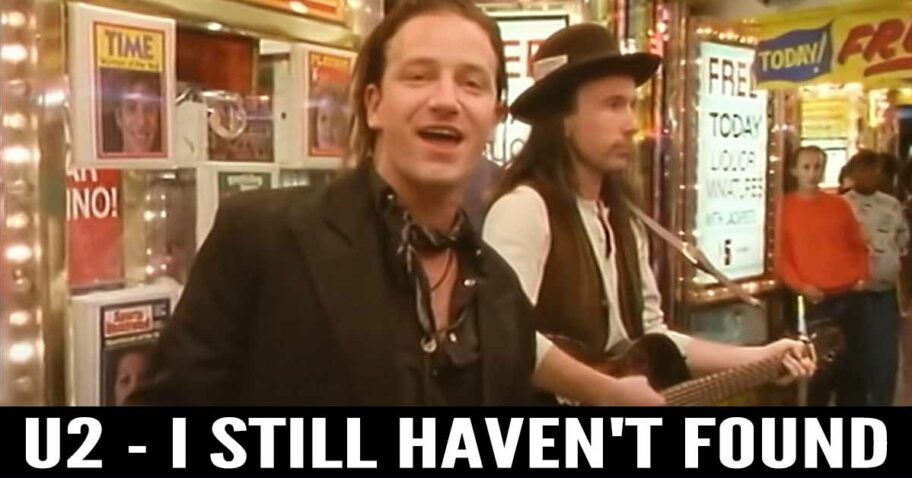
  • U2 – I Still Haven’t Found What I’m Looking For

    U2 – I Still Haven’t Found What I’m Looking For

    U2

    U2, the iconic Irish rock band formed in 1976, has left an indelible mark on the music world. With their unique blend of classic rock and post-punk influences, the band has crafted a sound that is both innovative and instantly recognizable. The driving force behind U2’s sonic identity is The Edge’s distinctive guitar work. This article will explore how The Edge’s approach to guitar playing bridges the gap between classic rock and post-punk, and how his style has shaped the band’s musical legacy.

    The Edge’s Roots in Classic Rock

    Born David Howell Evans, The Edge grew up listening to a diverse range of music, including classic rock artists like Led Zeppelin, The Who, and Jimi Hendrix. The influence of these legendary guitarists is evident in The Edge’s playing style, which often features powerful riffs, memorable solos, and a strong sense of melody. However, it’s the way he incorporates these classic rock elements with post-punk sensibilities that sets him apart from his peers.

    Incorporating Post-Punk Influences

    The late 1970s and early 1980s saw the rise of post-punk, a genre characterized by its experimental approach to rock music, often incorporating elements of punk, new wave, and art rock. Bands like Joy Division, Gang of Four, and Siouxsie and the Banshees made use of unconventional guitar techniques, such as unconventional chord voicings, heavy use of effects, and a focus on texture and atmosphere rather than traditional riff-based rock.
    The Edge’s guitar work seamlessly integrates these post-punk elements, helping to create a sound that is entirely U2’s own. His heavy use of delay effects, minimalist approach to riffs, and innovative use of textures and harmonics serve to bridge the gap between classic rock and post-punk.

    The Signature Sound of U2

    One of the defining aspects of U2’s sound is The Edge’s masterful use of delay. By utilizing this effect, he creates a vast sonic landscape that gives the band’s music a sense of space and depth. Songs like “Where the Streets Have No Name” and “With or Without You” showcase his skill in crafting complex, layered guitar parts that build upon each other to create a rich tapestry of sound.
    In addition to his use of effects, The Edge’s minimalist approach to riffs and melodies sets him apart from his classic rock predecessors. Rather than relying on flashy solos and intricate riffs, The Edge often opts for simple, repetitive patterns that provide a solid foundation for the rest of the band to build upon. This can be heard in tracks like “I Will Follow” and “Pride (In the Name of Love),” where his guitar work serves as a driving force that propels the music forward.

    Conclusion

    The Edge’s unique approach to guitar playing has played a crucial role in defining U2’s sound and setting them apart from other rock bands. By merging classic rock techniques with post-punk experimentation, he has created a style that is both familiar and innovative. As U2 continues to evolve and push musical boundaries, The Edge’s distinctive guitar work remains a key component of their enduring appeal and success.

    U2 – I Still Haven’t Found What I’m Looking For
  • U2 – I Still Haven’t Found What I’m Looking For

    U2 – I Still Haven’t Found What I’m Looking For

    U2

    U2, the iconic Irish rock band formed in 1976, has left an indelible mark on the music world. With their unique blend of classic rock and post-punk influences, the band has crafted a sound that is both innovative and instantly recognizable. The driving force behind U2’s sonic identity is The Edge’s distinctive guitar work. This article will explore how The Edge’s approach to guitar playing bridges the gap between classic rock and post-punk, and how his style has shaped the band’s musical legacy.

    The Edge’s Roots in Classic Rock

    Born David Howell Evans, The Edge grew up listening to a diverse range of music, including classic rock artists like Led Zeppelin, The Who, and Jimi Hendrix. The influence of these legendary guitarists is evident in The Edge’s playing style, which often features powerful riffs, memorable solos, and a strong sense of melody. However, it’s the way he incorporates these classic rock elements with post-punk sensibilities that sets him apart from his peers.

    Incorporating Post-Punk Influences

    The late 1970s and early 1980s saw the rise of post-punk, a genre characterized by its experimental approach to rock music, often incorporating elements of punk, new wave, and art rock. Bands like Joy Division, Gang of Four, and Siouxsie and the Banshees made use of unconventional guitar techniques, such as unconventional chord voicings, heavy use of effects, and a focus on texture and atmosphere rather than traditional riff-based rock.
    The Edge’s guitar work seamlessly integrates these post-punk elements, helping to create a sound that is entirely U2’s own. His heavy use of delay effects, minimalist approach to riffs, and innovative use of textures and harmonics serve to bridge the gap between classic rock and post-punk.

    The Signature Sound of U2

    One of the defining aspects of U2’s sound is The Edge’s masterful use of delay. By utilizing this effect, he creates a vast sonic landscape that gives the band’s music a sense of space and depth. Songs like “Where the Streets Have No Name” and “With or Without You” showcase his skill in crafting complex, layered guitar parts that build upon each other to create a rich tapestry of sound.
    In addition to his use of effects, The Edge’s minimalist approach to riffs and melodies sets him apart from his classic rock predecessors. Rather than relying on flashy solos and intricate riffs, The Edge often opts for simple, repetitive patterns that provide a solid foundation for the rest of the band to build upon. This can be heard in tracks like “I Will Follow” and “Pride (In the Name of Love),” where his guitar work serves as a driving force that propels the music forward.

    Conclusion

    The Edge’s unique approach to guitar playing has played a crucial role in defining U2’s sound and setting them apart from other rock bands. By merging classic rock techniques with post-punk experimentation, he has created a style that is both familiar and innovative. As U2 continues to evolve and push musical boundaries, The Edge’s distinctive guitar work remains a key component of their enduring appeal and success.

  • U2 – Sunday Bloody Sunday

    U2 – Sunday Bloody Sunday

    No one will deny that U2 has established itself as one of the supreme bands in rock history. What’s more, for two decades of the group’s existence, no musician left U2, and no new one joined.

    According to the tradition of the 80s, young Irishmen became a band before they could play. U2, strongly influenced by punk ideology, opposed the empty visions of dark new wave groups by going out to the audience with youthful energy. Their first release – “U23” – from 1979, which was released only in Ireland, was supported by a self-organized route. Despite the lack of a proposal for a large record contract, after several concerts in London, the tour ended with an event for two thousand fans in Dublin.

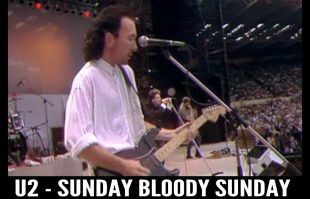
    The first three albums – “Boy” (1980), “October” (1981) and “War” (1983) – defined the style of the group. They were soon recognized as the most politically engaged band since The Clash. At a concert in Belfast, before the first performance of “Sunday Bloody Sunday”, Bono announced: “If you don’t like it, let us know …”